
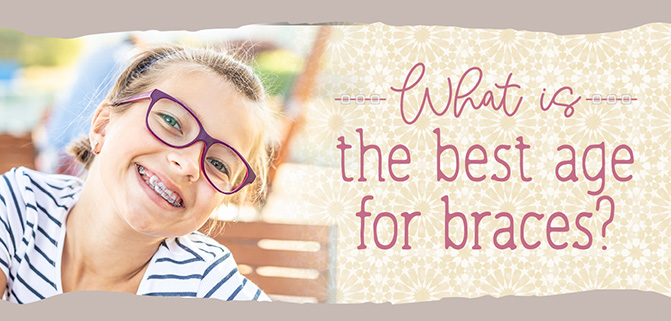
Is there a perfect age to get braces? Not exactly! Every smile develops on its own schedule, so the best time to begin treatment depends on each patient’s unique teeth, bite and growth.
Every smile develops differently. Some children benefit from early treatment while they are still growing, while others are better off waiting until more permanent teeth have arrived. Teens are often great candidates for braces, but adults can straighten their teeth, too. At Skelton Orthodontics, Dr. Aimee Skelton treats patients of all ages and recommends care based on each person’s unique smile, growth and orthodontic needs.
What Is the Best Age to Get Braces?
There is no single best age to get braces. The right time depends on factors such as:
- How the teeth and jaws are developing
- Which permanent teeth have come in
- The type and severity of the orthodontic problem
- Whether the patient is still growing
- The patient’s ability to care for braces or aligners
- The patient’s individual treatment goals
Many patients begin comprehensive orthodontic treatment between ages 9 and 14, when most permanent teeth have erupted but the jaws may still be growing. However, that does not mean every child needs braces during these years—or that someone has missed their chance if they are older.
The best way to determine the right timing is through an orthodontic evaluation with Dr. Skelton.
Why Should Children See an Orthodontist by Age 7?
The American Association of Orthodontists recommends that children have their first orthodontic checkup no later than age 7. That may sound early, especially when your child still has several baby teeth, but this appointment does not automatically mean it is time for braces.
Around age 7, children usually have a mix of baby and permanent teeth. This gives Dr. Skelton an early look at how the teeth are coming in and how the jaws are growing. She may be able to identify concerns such as:
- Crowded or overlapping teeth
- Crossbites, underbites or significant overbites
- Teeth that are missing, extra or unable to erupt properly
- Uneven jaw growth
- Early or late loss of baby teeth
- Harmful oral habits affecting tooth or jaw development
Some children may benefit from early orthodontic treatment. Others simply need a little more time to grow.
Does an Age 7 Evaluation Mean My Child Will Get Braces?
Nope! An early evaluation is often more about planning than treating.
After examining your child’s smile, Dr. Skelton may recommend one of three paths:
- No treatment is needed. Your child’s teeth and jaws are developing well, and no orthodontic care is currently necessary.
- We will monitor their growth. Treatment may be helpful later, so Dr. Skelton will watch how the teeth and jaws develop and recommend braces when the timing is right.
- Early treatment may help. A developing bite or jaw problem may be easier to address while your child is still growing.
If your child is not ready for treatment, waiting is not “doing nothing.” It is choosing the right timing for their unique smile.
When Are Braces Recommended for Younger Children?
Early orthodontic treatment, sometimes called Phase 1 or interceptive treatment, is recommended only when there is a specific reason to begin before most permanent teeth have erupted.
For example, early treatment may help guide jaw growth, make room for incoming teeth or correct certain bite problems. Depending on the child’s needs, treatment might involve limited braces, an expander or another orthodontic appliance.
The goal is not to put every young child in braces. It is to address problems that may become more difficult to correct if treatment is delayed. Dr. Skelton carefully evaluates the benefits before recommending early care.
Are the Teen Years the Best Time for Braces?
For many patients, the teen years are an excellent time for braces. Most or all permanent teeth have typically arrived, and the jaw may still be growing. This combination can make it a good time to correct crowding, spacing and bite problems.
There is also a social bonus: braces are pretty common among middle and high school students. Your teen is unlikely to be the only one comparing rubber-band colors at lunch!
Still, age alone does not determine whether a teenager is ready. Dr. Skelton will consider the teen’s dental development, treatment needs and ability to keep their teeth and braces clean before creating a personalized plan.
Can Adults Get Braces?
Absolutely! Braces do not come with an age limit.
Healthy teeth can be moved at almost any age, and many adults choose orthodontic treatment to improve their smile, bite or both. Some never had the opportunity to receive treatment as children. Others notice that their teeth have shifted over time or want to correct a concern that has bothered them for years.
Adult treatment may require a slightly different approach because the jaws have finished growing and adults are more likely to have previous dental work or gum concerns. Dr. Skelton takes these factors into account when recommending treatment.
Whether you are 8, 18 or 58, it is worth asking what orthodontic care could do for your smile.
What Signs Suggest It Is Time for an Orthodontic Evaluation?
You do not have to wait for a certain birthday—or even a referral from your dentist—to schedule an orthodontic evaluation. Consider visiting Dr. Skelton if you notice:
- Crowded, crooked or overlapping teeth
- Large spaces between teeth
- Difficulty biting or chewing
- Teeth that do not meet properly
- An overbite, underbite, open bite or crossbite
- A jaw that shifts, clicks or appears uneven
- Permanent teeth that are delayed or erupting out of position
- Early or late loss of baby teeth
- Mouth breathing or prolonged thumb-sucking
- A smile that makes you or your child feel self-conscious
Some orthodontic concerns are easy to see, while others are happening below the surface. An evaluation provides a clearer picture of what is developing and whether treatment is needed now, later or not at all.
The Right Age Is the Right Age for You
So, what is the best age for braces? It is the age when treatment will provide the greatest benefit for that individual patient.
At Skelton Orthodontics, there are no one-size-fits-all smiles or treatment timelines. Dr. Skelton welcomes children, teens and adults from Fort Payne and surrounding communities. She will evaluate your teeth and bite, explain your options and help you understand when—or whether—it is time to begin treatment.
Wondering if the timing is right for you or your child? Request an appointment with Skelton Orthodontics and take the first step toward a healthy, confident smile.